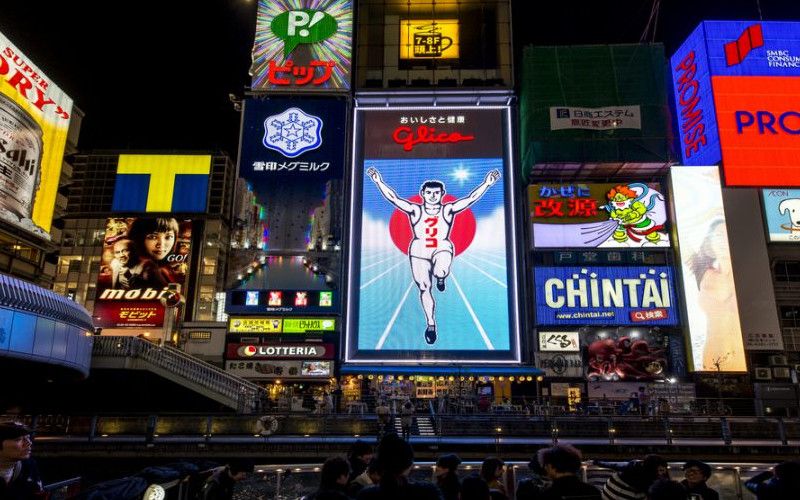
The Glico Running Man: Dotonbori's Iconic Billboard
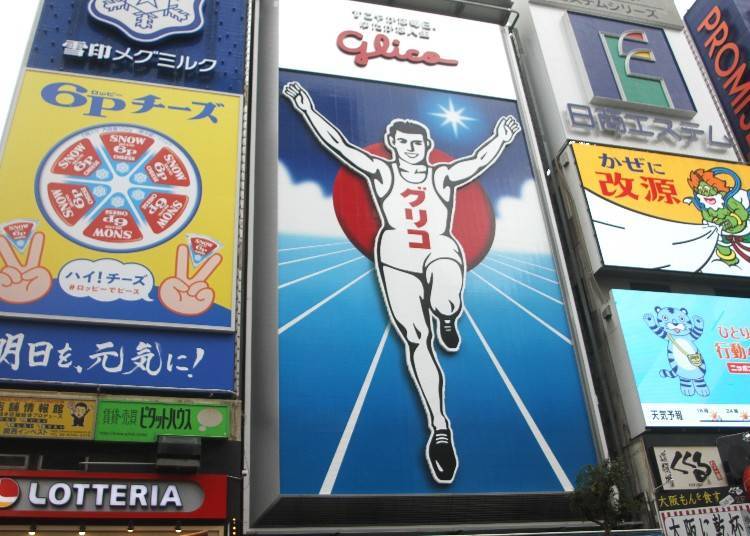
A runner frozen mid-stride above the Dotonbori Canal has greeted Osaka visitors since 1935. The Ezaki Glico confectionery company installed the first version of the sign that year, and the current design is the sixth generation. The figure represents the vitality of a healthy runner crossing the finish line, tying back to the caramel candy Glico originally sold as an energy booster. Today the billboard spans 33 meters wide and lights up the canal with over 140,000 LED bulbs.
Why the Sign Keeps Changing
Glico has refreshed the billboard roughly every decade, swapping the runner's backdrop from cherry blossoms to stadium tracks to the current LED display that shows a rotating cast of Osaka landmarks. The 2014 renovation replaced neon tubes with energy-efficient LEDs, allowing animated backgrounds that shift through scenes of Osaka Castle, cherry blossoms, and fireworks. The runner himself stayed consistent, a deliberate choice by the company to keep the silhouette recognizable across generations.
Best Photo Spots and Timing
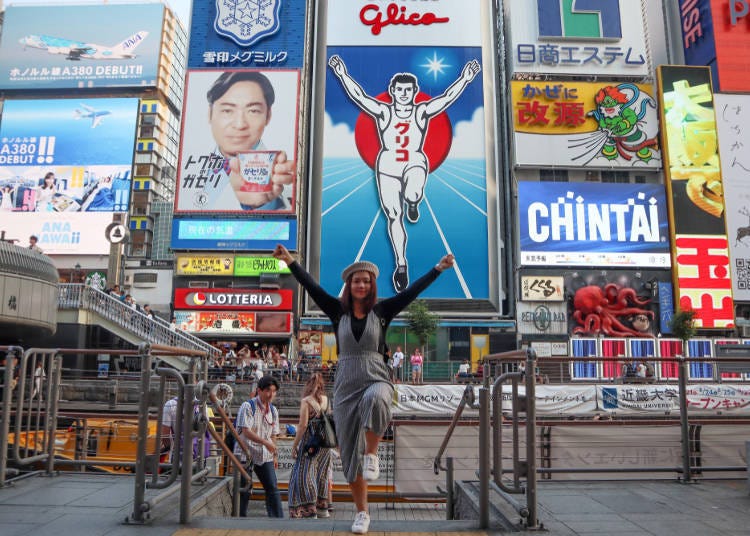
The most crowded angle is from Ebisubashi Bridge, where tourists line up to mimic the runner's pose. For a cleaner shot, walk down the steps to the Tombori River Walk on the south bank. From there you can frame the sign against the canal reflection, and the foot traffic thins out considerably. The sign illuminates at sunset, around 5:30 PM in winter and 7:00 PM in summer, and stays lit until 11 PM. Photographers aiming for the reflection should arrive 30 minutes after the lights turn on, once the water settles from passing boats.
The Tombori River Cruise offers another angle. Boats pause in front of the sign for about two minutes, long enough for the crew to snap a photo of passengers with the runner overhead. The cruise departs from the Don Quijote Dotonbori pier on the north bank and costs 900 JPY for adults, 450 JPY for children.
The Surrounding Area
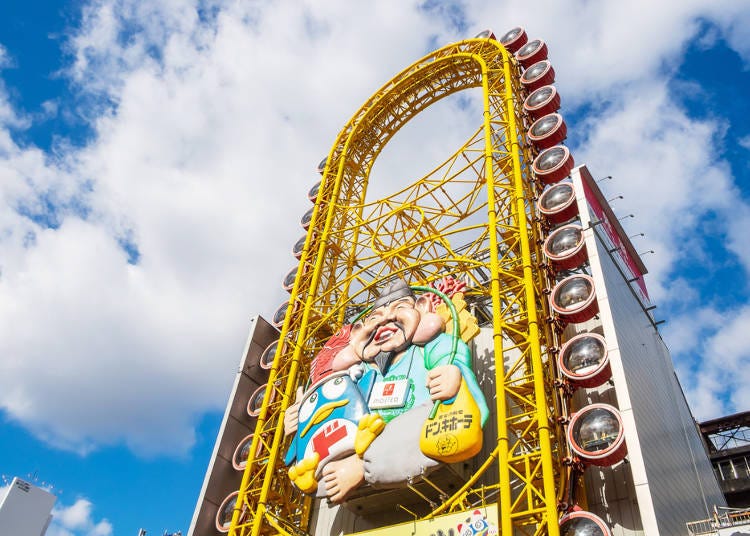
Ebisubashi Bridge sits directly beneath the sign and connects to Shinsaibashi-suji, the covered shopping arcade running 580 meters north. The bridge itself is a popular meeting point for locals, who reference it as "the Glico meeting spot." Just east, the Don Quijote Dotonbori store rises with its elliptical Ebisu Tower Ferris wheel, which takes 15 minutes per rotation and costs 600 JPY. South of the bridge, Hozenji Yokocho offers a narrow stone-paved alley lined with izakaya and the moss-covered Hozenji Temple.
Across the canal from the sign, the Kani Doraku crab waves its mechanical legs and the Zuboraya fugu lantern glows above its entrance. These three signs form a triangle of light visible from the Ebisubashi railing, and most visitors photograph all three in a single panorama. The area between them holds the densest concentration of restaurants in Dotonbori, with kushikatsu stalls, fugu specialists, and crab kaiseki rooms competing for foot traffic.
The Glico sign sits at the intersection of Dotonbori Street and Ebisubashi, placing it within a five-minute walk of Namba Station on the Midosuji Line. From JR Namba Station, the walk takes about five minutes. From Shin-Osaka Station, take the Midosuji Line subway directly to Namba in 20 minutes for 280 JPY.
Practical Details
- Address: 1-9 Dotonbori, Chuo-ku, Osaka 542-0071
- Nearest Station: Namba Station (Midosuji Line), Exit 14, 3-minute walk
- Hours: Sign illuminates from sunset to 11:00 PM daily
- Price: Free to view; Tombori River Cruise 900 JPY adults, 450 JPY children
- Website: glico.com